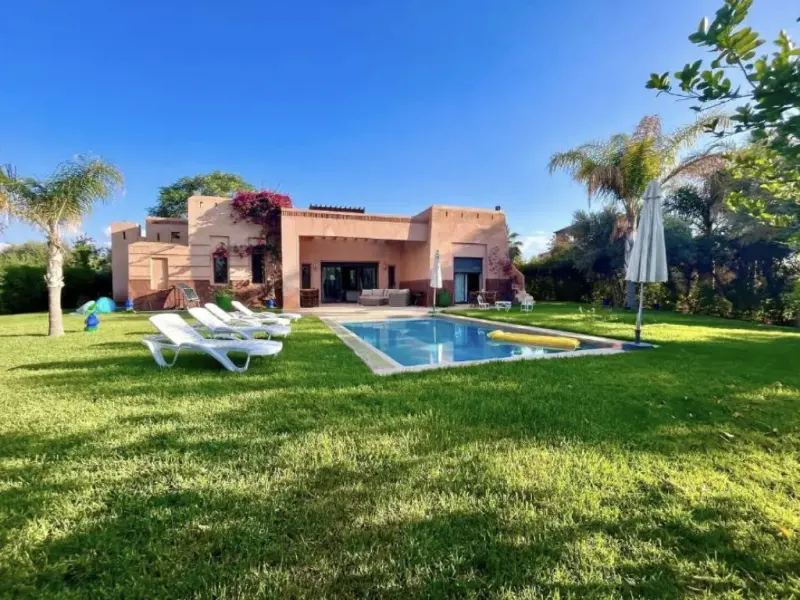
Marrakech · Villa
Single-storey villa, Route de Fès
Route de Fès, Marrakech — around 25 minutes from the city centre
- 177 m²
- 3 bedrooms
- Plot 1,000 m²

Invest in Morocco
Close to Europe, with markets that differ widely from one city to the next and many possible uses: a property project in Morocco needs methodical preparation.
Key figures
Six figures for context, each with its source and date.
19.8 million
According to the Ministry of Tourism, January 2026. Up 14% year on year.
4.9%
National accounts of the High Commission for Planning, June 2026. Provisional figure.
26 million
Official target, confirmed in January 2026.
MAD 38 bn
Agreement signed on 24 July 2025 between the government and ONDA.
+0.7%
Bank Al-Maghrib / ANCFCC index, 2nd quarter of 2026. National average.
4%
For built property (5% for bare land), excluding land registry fees and notary fees.
These figures describe the general context. They cannot predict the value of, or income from, any individual property, and are not a promise of returns.
Whether it is an apartment in Agadir, a villa in Marrakech or a city home intended for a long-term let, buying property in Morocco can combine personal use, quality of life and the building of assets. The outcome nevertheless depends on the choice of city, the micro-location, a realistic model of use and rigorous checks on the property.
Morocco is not a single, uniform market. A holiday apartment in Marrakech does not follow the same rules as a home let year-round in Rabat. Good results do not come from the act of buying alone, but from the combination of location, quality of the property, purchase price, use and management.
These figures describe a general context. They cannot be used to forecast how the value of, or income from, a particular property will change.
Foreigners may buy property in Morocco. Agricultural land and land outside urban boundaries are subject to restrictions and to a specific procedure (a certificate of non-agricultural use, the attestation de vocation non agricole), which must be examined case by case.
We recommend giving preference to titled properties, whose legal position can be consulted at the land registry (ANCFCC). Untitled properties rest on traditional deeds and call for in-depth legal analysis.
Since July 2026, property sales, preliminary sale agreements and special powers of attorney must be drawn up as authentic deeds. In practice, foreign buyers use a notary.
These include, in particular, registration duty (4% for a built property, 5% for bare land), land registry fees (1.5% plus a fixed fee, according to the ANCFCC tariff) and the notary’s fees. The notary draws up a precise statement for each transaction.
To be able to transfer the proceeds of a resale back abroad, the purchase must have been financed with foreign currency brought into Morocco and documented by the bank. That paper trail must be built up from the outset.
Short-term holiday letting is governed by Law 80-14 and its implementing texts, whose application to individual furnished properties is still under way. The co-ownership rules may also restrict this use. These points are checked before purchase, not after.
Destinations
Six markets, each with its own logic. Each page presents the areas, the possible uses, the points to watch and the published projects.
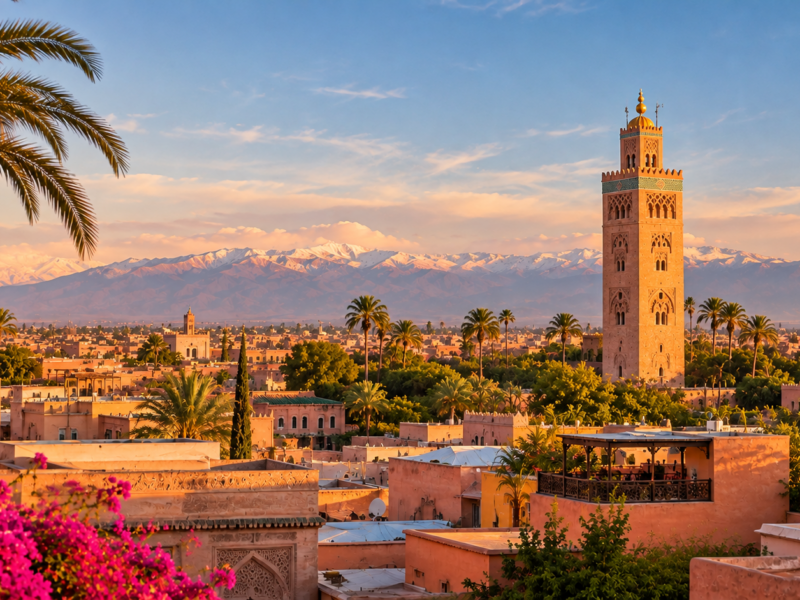 Marrakech
International tourism, villas and second homes
1 published project
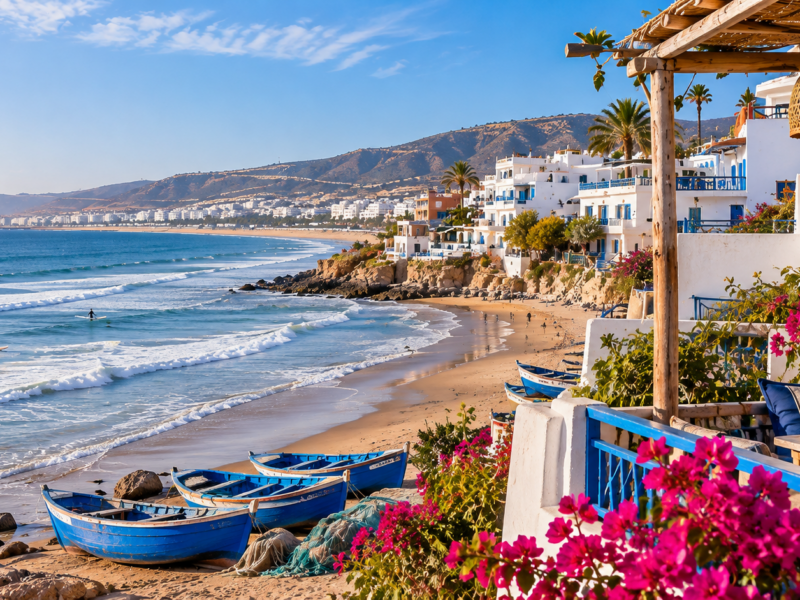 Agadir and Taghazout
Atlantic coast, mild winters and extended stays
Discover the city
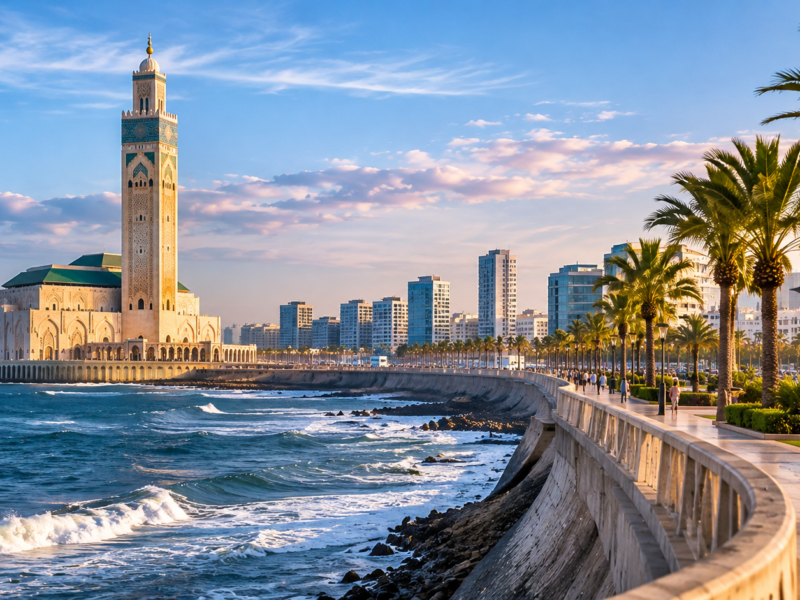 Casablanca
Economic capital and long-term lets
Discover the city
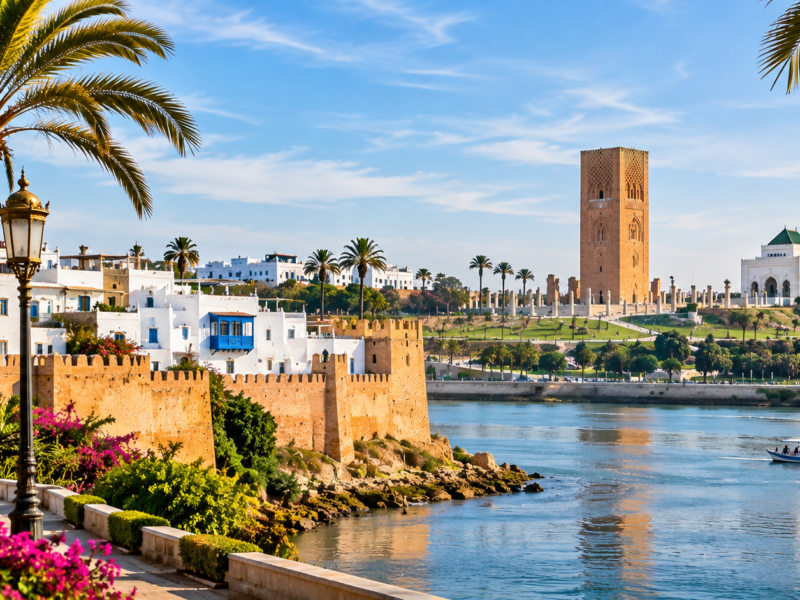 Rabat
Capital city, families and lasting residential demand
Discover the city
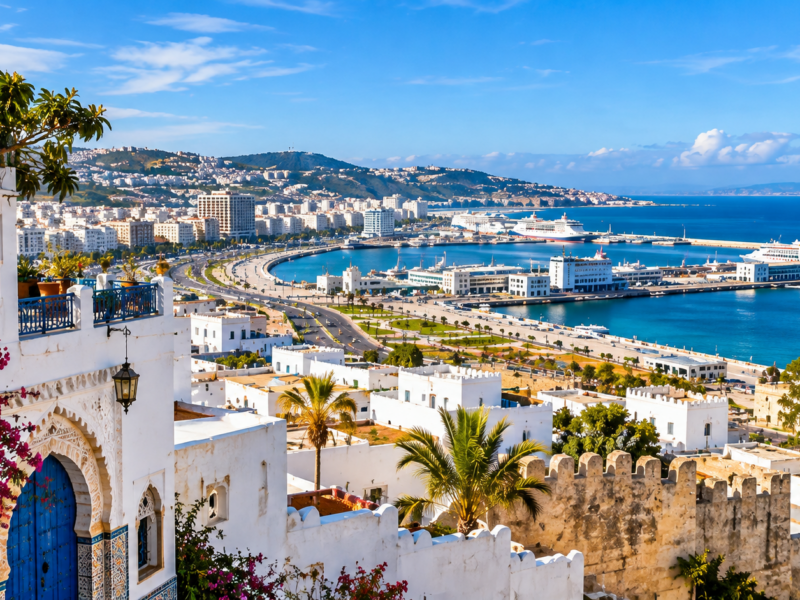 Tangier
Close to Europe, a major port and economic momentum
Discover the city
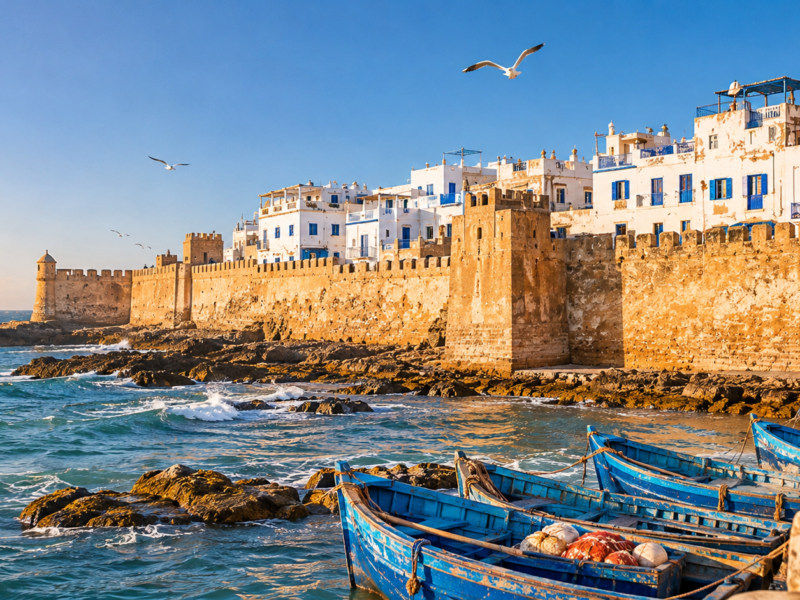 Essaouira
Medina, ocean and a more discreet market
Discover the city
Steps
An overview of the typical process for a titled property. Every transaction remains specific.
Use, city, overall budget including acquisition costs, method of financing.
Comparison of several properties, with viewings in person or remotely.
Land status (title, certificate of ownership), seller, planning, co-ownership, condition of the building.
A preliminary sale agreement drawn up as an authentic (notarial) deed, with conditions and a timetable.
Transfer in foreign currency through a documented banking channel, a condition of any later transfer back abroad.
Final deed, payment of duties, entry at the land registry (ANCFCC), handover of keys.
This overview is general and does not constitute legal or tax advice. The rules change: have your situation confirmed by a notary and, where appropriate, a tax adviser.
Projects
A deliberately limited selection. Each listing publishes only information provided by the seller or developer and reviewed by our team.
Marrakech · Villa
Route de Fès, Marrakech — around 25 minutes from the city centre
Guides and resources
Moroccan city guides
Two sought-after destinations, two different logics. A comparison framework based on use, not on promises of yield.
Financing and budget
Registration duty, land registry fees, the notary, annual taxes, tax on resale: the items to build into your budget, with their sources.
Buying property as a foreigner
From the first scoping conversation to registration at the land registry: the typical path for a non-resident buyer, and the points to have checked at each stage.
FAQs
The foreign exchange regulations allow Moroccan banks to finance up to 80% of the price of a property for a non-resident foreign buyer, subject to conditions. Whether a loan is granted, and on what terms, depends on each bank.
An owner is liable in particular for housing tax (taxe d'habitation) and municipal services tax (taxe de services communaux); rental income and the capital gain on resale are taxable in Morocco. Morocco has concluded double taxation treaties with Germany, Austria, Switzerland, France and the United Kingdom. Your situation must be examined by a tax adviser.
A visit in person is strongly recommended before you commit. Some steps can then be carried out remotely, including signature under a power of attorney drawn up as an authentic (notarial) deed, in accordance with the arrangements agreed with the notary.
It depends on the use. Marrakech and Agadir mainly suit second-home projects; Casablanca and Rabat meet residential and long-term rental demand; Tangier combines the two; Essaouira is a more discreet market. Our city pages describe each market in detail.
A first conversation, without obligation
Describe your project in a few lines. We will come back to you to clarify your objectives and explain, in practical terms, what DACHMA Advisory can — and cannot — do for you.